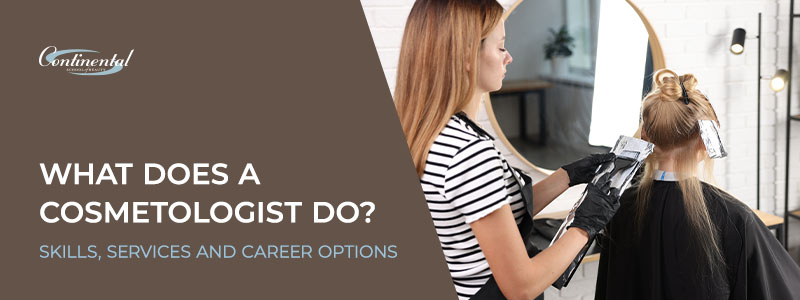
What Does a Cosmetologist Do? Skills, Services and Career Options
A cosmetologist is a beauty professional trained in multiple areas of hair and beauty care. Their work may include haircutting and shaping, hairstyling, hair coloring and lightening, chemical hair services, skincare, nail care, and other beauty services.
But being a cosmetologist involves more than performing services. Cosmetologists consult with clients, maintain clean and organized work areas, manage appointments, stay current with beauty techniques and products, and use both technical and interpersonal skills throughout the workday.
If you are considering beauty school, understanding what cosmetologists actually do can help you decide whether this type of hands-on, client-focused career matches your interests.
What Does a Cosmetologist Do?
A cosmetologist works directly with clients to provide hair and beauty services. Because cosmetology covers multiple areas of beauty, the specific services a cosmetologist performs can vary based on their training and workplace.
A typical day may include:
- Consulting with clients about hairstyles, hair color, and beauty services
- Cutting and shaping hair
- Coloring and lightening hair
- Styling hair
- Performing chemical hair services
- Providing skincare or nail care services
- Preparing tools, products, and workstations
- Following sanitation and safety procedures
- Managing appointments and client information
- Recommending appropriate products and services
For many cosmetologists, each day brings different clients, services, and challenges. The profession combines technical skills with creativity, communication, and client service.
What Services Do Cosmetologists Provide?
One of the defining characteristics of cosmetology is its breadth. Rather than concentrating exclusively on one beauty specialty, cosmetology education covers multiple areas of hair and beauty care.
At Continental School of Beauty, the Hairdressing & Cosmetology curriculum places a significant emphasis on hair, including haircutting and shaping, hairstyling, hair coloring and lightening, and chemical restructuring. Students also receive education in areas including skin care and nail care.
Haircutting and Shaping
Haircutting requires an understanding of techniques used to create different shapes, lengths, and styles while considering the client’s hair and desired result.
Cosmetologists may work with clients who want a completely new haircut, help maintain an existing style, or make changes to shape, length, and overall appearance.
At Continental School of Beauty, Haircutting and Shaping is a significant component of the Hairdressing & Cosmetology curriculum, giving students opportunities to develop these skills through education and hands-on practice.
Hairstyling
Hairstyling can involve working with different hair types, textures, lengths, and client preferences to create a desired finished look.
Cosmetologists use styling techniques and professional tools to work with clients seeking everyday styles, changes in appearance, or styles for special occasions.
Because hairstyling is such a central part of working with hair, it represents one of the largest areas of instruction within Continental’s Hairdressing & Cosmetology curriculum.
Hair Coloring and Lightening
Hair color is another major area of cosmetology. Cosmetologists may work with clients who want to change their hair color, lighten their hair, maintain an existing color, or explore a new look.
Color services require technical knowledge as well as careful client consultation. A cosmetologist needs to understand the client’s goals and evaluate the hair before determining an appropriate approach.
Continental’s curriculum includes dedicated instruction in Hair Coloring and Lightening so students can build knowledge and practical skills in this important area of cosmetology.
Chemical Restructuring
Cosmetology training can also include chemical restructuring techniques used to change the texture or structure of the hair.
Because these services involve professional products and chemical processes, cosmetologists need an understanding of proper techniques, product use, hair condition, and safety.
Chemical Restructuring is another major component of Continental’s Hairdressing & Cosmetology curriculum.
Hair and Scalp Care
Working with hair also involves understanding its condition and knowing how different products and treatments are used.
Continental’s curriculum includes Hair Analysis as well as education related to shampoos, rinses, conditioners, and treatments. Students also learn about hair and scalp disorders and diseases as part of their overall cosmetology education.
This knowledge can help future cosmetologists better understand the hair and scalp as they develop their practical skills.
Skin Care
Although hair makes up a substantial portion of cosmetology education, students can also be introduced to other areas of beauty.
Continental’s Hairdressing & Cosmetology curriculum includes education in Skin Care and Procedures, providing students with exposure to this area as part of their broader cosmetology training.
Students who discover that skincare is their primary interest may also want to compare cosmetology with a specialized Esthetics program, which provides more concentrated education in skincare.
Nail Care
Nail care is also included within Continental’s Hairdressing & Cosmetology curriculum through instruction in Nail Care and Procedures.
For students who are particularly interested in skincare and nails, Continental also offers an Esthetics & Nail Specialty program designed to provide more specialized training in those areas.
What Skills Does a Cosmetologist Need?
Technical beauty skills are only one part of working in cosmetology. Successful client experiences also depend on communication, organization, professionalism, sanitation, creativity, and time management.
Technical Skills
Cosmetologists need practical skills to perform hair and beauty services. Developing those skills takes education, practice, repetition, and experience working with different techniques and client needs.
Hands-on training gives students opportunities to apply what they learn and become more comfortable using professional tools, products, and techniques.
Communication and Client Consultation
Many salon services begin with a conversation.
Cosmetologists need to listen carefully, ask questions, understand what a client wants, and communicate clearly about the service. Strong consultations can help establish expectations and give the cosmetologist the information needed to determine how to approach the client’s desired result.
Creativity and Problem-Solving
Cosmetology combines technical knowledge with creativity.
Clients may arrive with a specific idea, inspiration photo, or general vision for how they want to look. A cosmetologist needs to consider the client’s preferences along with factors such as hair characteristics and the services being requested.
This makes problem-solving an important part of the job.
Sanitation and Safety
Maintaining a clean and organized workspace is an essential part of cosmetology.
Cosmetologists need to properly prepare their workstations, care for tools and equipment, and follow sanitation and safety procedures throughout the workday.
Continental’s Hairdressing & Cosmetology curriculum includes Health and Safety as a dedicated area of instruction.
Time Management and Organization
A cosmetologist may work with several clients in one day, and different services can require very different amounts of time.
Staying organized, preparing for appointments, and managing time effectively can help the workday run smoothly and provide a better experience for clients.
Client Service
Cosmetology is a service-focused profession. In addition to performing technical services, cosmetologists spend a significant amount of time interacting with clients.
Professionalism, communication, listening, and attention to the client experience can all contribute to building strong relationships and encouraging repeat business.
Where Do Cosmetologists Work?
Cosmetologists can work in a variety of beauty and personal care environments.
Common settings can include:
- Hair salons
- Full-service salons
- Beauty studios
- Salon suites
- Spas
- Resorts
- Retail beauty environments
- Entertainment and production settings
Some cosmetologists work as part of an established salon or beauty business, while others may eventually pursue more independent career paths.
The work environment can have a significant effect on a cosmetologist’s day-to-day experience. Someone working in a busy salon, for example, may have a different routine and clientele than someone working in a smaller studio or production environment.
Cosmetologist vs. Esthetician: What’s the Difference?
Cosmetology and esthetics are both part of the beauty industry, but the education has a different focus.
Cosmetology provides broader training across hair and other areas of beauty, with a significant emphasis on haircutting, hairstyling, hair coloring, and other hair services.
Esthetics provides more specialized education focused on skincare and related services.
If you are primarily interested in cutting, coloring, styling, and working with hair while also gaining exposure to other areas of beauty, cosmetology may be worth exploring.
If skincare is your primary interest, a specialized Esthetics program may be a better fit.
Cosmetology vs. Esthetics & Nail Specialty: What’s the Difference?
The biggest difference is the focus of the education.
Cosmetology provides broad beauty education with a significant concentration on hair. Continental’s Esthetics & Nail Specialty program combines specialized education in skincare and nail care.
Students who are especially interested in hair cutting, coloring, styling, and related hair services may prefer Hairdressing & Cosmetology.
Students whose interests are concentrated more heavily in skincare and nails may want to explore Esthetics & Nail Specialty.
Comparing the curriculum and hands-on training for each program can help you determine which direction better matches the type of beauty work you want to pursue.
What Career Options Are Available in Cosmetology?
Cosmetology skills can be used in a variety of beauty careers and professional environments. The direction someone chooses may evolve as they gain experience, develop their skills, and discover which aspects of the beauty industry interest them most.
Hairstylist
Hairstylists work directly with clients and may provide services involving cutting, shaping, coloring, and styling hair.
Some hairstylists eventually develop particular areas of interest based on their skills, experience, and clientele.
Salon Professional
Cosmetologists may work in salons alongside other hair and beauty professionals. The types of services they provide can depend on the salon, their role, and their experience.
Working in a salon can provide opportunities to interact with a variety of clients while continuing to develop technical and client-service skills.
Independent Beauty Professional
With experience, some cosmetologists choose more independent working arrangements.
Independent beauty professionals may take on responsibilities beyond providing services, including managing appointments, communicating with clients, marketing, purchasing products and supplies, and handling other aspects of running their business.
Salon Owner
Some experienced beauty professionals eventually choose to pursue salon ownership.
Running a salon involves more than cosmetology skills. Owners may also be responsible for staffing, scheduling, operations, inventory, marketing, customer service, and other aspects of managing a business.
Beauty Educator
For someone who enjoys both cosmetology and teaching, education may eventually become another career direction.
Experienced beauty professionals may pursue opportunities to help future students develop technical skills and prepare for work in the beauty industry when they meet the applicable requirements for those roles.
Entertainment, Editorial and Production Stylist
Beauty professionals may also find opportunities in areas such as photography, fashion, film, television, theater, events, or other production environments.
These settings may involve creating hairstyles or beauty looks for specific projects, productions, events, or creative concepts.
Beauty Brand or Product Representative
Knowledge of professional hair and beauty products can also be useful in positions involving beauty brands, product education, demonstrations, or sales.
These roles can provide another way to use beauty industry knowledge outside of a traditional salon environment.
Is Cosmetology a Good Career Fit for You?
Cosmetology may be worth exploring if you enjoy creative, hands-on work and interacting directly with people.
You may enjoy cosmetology if you are interested in:
- Hair cutting, shaping, coloring, and styling
- Beauty and personal care
- Working directly with clients
- Learning through hands-on practice
- Using creativity and technical skills together
- Problem-solving
- Learning about professional products and techniques
- Working in an active, client-focused environment
It is also important to consider the practical side of the profession.
Cosmetologists spend time preparing and cleaning work areas, organizing tools and supplies, managing appointments, communicating with clients, and working on their feet. Technical skill, professionalism, organization, and client service all play a role in the job.
Understanding both the creative and practical sides of cosmetology can help you determine whether it is a good fit for your interests.
What Is Cosmetology School Like?
Because cosmetology is a hands-on field, students need opportunities to practice the techniques they are learning.
At Continental School of Beauty, the Hairdressing & Cosmetology program combines theory with practical instruction. The 1,000-hour curriculum covers areas including:
- Hair Analysis
- Shampoos, Rinses, Conditioners and Treatments
- Haircutting and Shaping
- Hairstyling
- Chemical Restructuring
- Hair Coloring and Lightening
- Nail Care and Procedures
- Skin Care and Procedures
- Health and Safety
Students have opportunities to develop practical skills and apply what they learn as part of their beauty education.
The program also introduces students to additional areas important to working in the industry, including Professional Requirements, Career Development, and Salon Management.
Frequently Asked Questions About Cosmetology
What does a cosmetologist do every day?
A cosmetologist’s day can include consulting with clients, cutting and shaping hair, coloring or lightening hair, hairstyling, preparing tools and products, cleaning and organizing work areas, managing appointments, and providing other hair and beauty services.
The exact schedule can vary depending on the cosmetologist’s workplace, role, and clients.
Do cosmetologists only work with hair?
No. Hair is a significant focus of cosmetology, but cosmetology education can also include other areas of beauty.
Continental’s Hairdressing & Cosmetology curriculum, for example, includes Skin Care and Procedures and Nail Care and Procedures in addition to extensive education in haircutting, hairstyling, hair coloring, chemical restructuring, and other areas of hair care.
Is cosmetology school hands-on?
Hands-on practice is an important part of learning cosmetology because students need opportunities to develop technical skills using professional tools, products, and techniques.
Continental’s Hairdressing & Cosmetology program combines theory and practical instruction so students can apply what they are learning as they develop their skills.
What’s the difference between cosmetology and esthetics?
Cosmetology provides broader beauty education with a significant emphasis on hair, while esthetics concentrates more specifically on skincare and related services.
Students who are primarily interested in hair may prefer cosmetology, while those whose interests are centered on skincare may want to explore specialized esthetics training.
Where can cosmetologists work?
Cosmetologists can work in settings such as salons, beauty studios, salon suites, spas, resorts, retail beauty environments, and entertainment or production settings.
The work environment and types of services performed can vary depending on the position, employer, and cosmetologist’s experience.
What career paths can cosmetology lead to?
Potential career directions can include hairstylist, salon professional, independent beauty professional, salon owner, beauty educator, entertainment or production stylist, and beauty brand or product representative.
The opportunities someone pursues can depend on their interests, experience, additional training, and the requirements of a particular position.
Explore Hairdressing & Cosmetology at Continental School of Beauty
If you enjoy working with hair, expressing creativity, developing hands-on skills, and interacting directly with people, cosmetology may be a field worth exploring.
Continental School of Beauty’s Hairdressing & Cosmetology program combines theory and practical instruction across haircutting and shaping, hairstyling, hair coloring and lightening, chemical restructuring, hair and scalp care, skincare, nail care, health and safety, and other areas of cosmetology education.
The program is offered at Continental School of Beauty campuses in Rochester, West Seneca, and Syracuse.
Explore the Hairdressing & Cosmetology program to learn more about the curriculum, training experience, and what you can expect as a Continental student.
